HiBREW Coffee Academy
How to choose a coffee grinder for espresso
Espresso is unforgiving about grind size. A small change moves a shot from sour to bitter, which is why the grinder deserves as much thought as the machine.
4 min read ·
Why a burr grinder
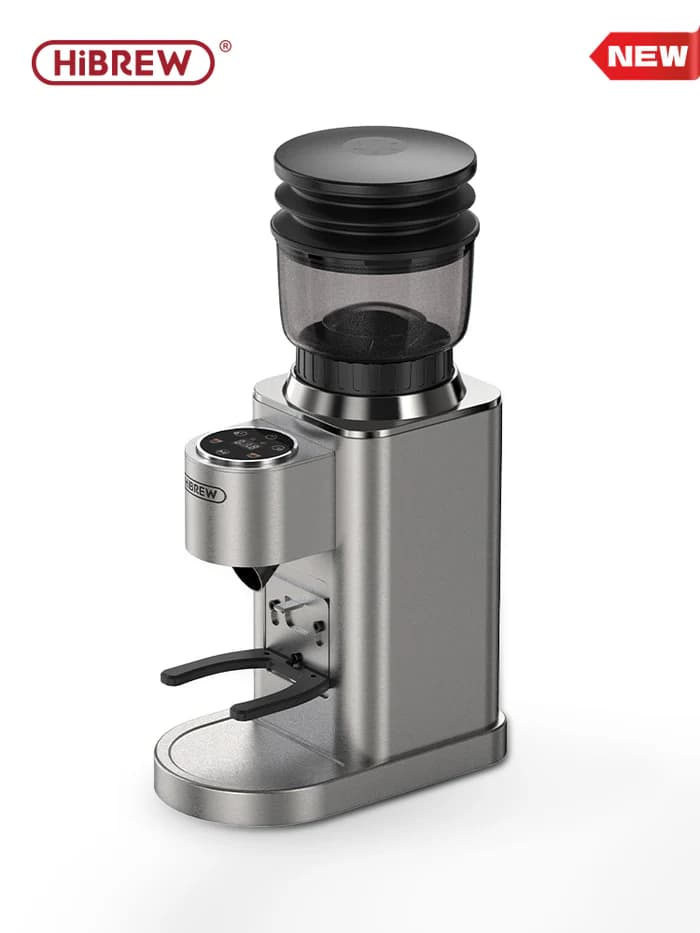
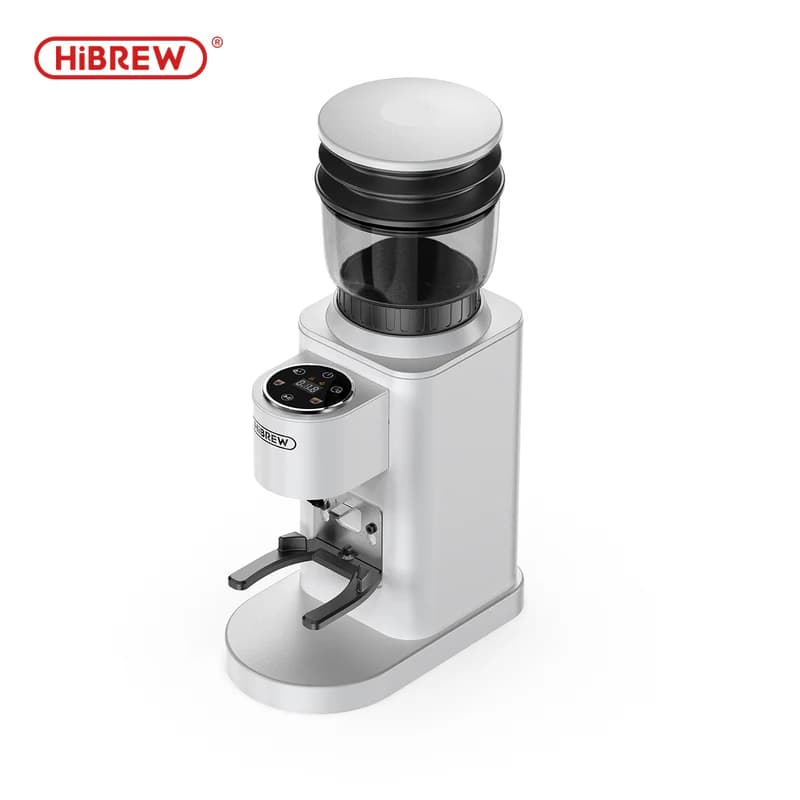
Blade grinders chop coffee into a mix of dust and chunks. Burr grinders crush beans between two cutting surfaces set a fixed distance apart, so particles come out a similar size and extract at a similar rate. The burr type of each HiBREW grinder is stated on its product page.
What to compare
- Grind range and steps: more steps in the fine range means finer adjustment for espresso. If you also brew filter coffee, check the coarse end too.
- Burr type and size: conical and flat burrs both make good espresso; larger burrs generally grind faster.
- Dosing: a timer or programmable dose makes results repeatable. Weighing your dose is more precise still.
- Portafilter support: grinding straight into a 51 mm or 58 mm portafilter saves a step and a mess.
- Static and retention: anti-static features reduce clinging grounds; low retention means less stale coffee in the next dose.
- Hopper size and footprint: a small hopper suits single-dosing; a large one suits a busy household.
Matching a grinder to your machine
If your machine uses non-pressurised baskets, you need a grinder that can go fine enough and adjust in small steps. Pressurised baskets are more forgiving and work across a wider range of grind sizes.
Buying both at once? CofiMart sometimes lists machine-and-grinder bundles, which appear in the grinder category when available.
Looking after it
Brush out the burr chamber regularly and keep beans dry. Oily, very dark roasts leave more residue and need more frequent cleaning. Never wash burrs with water unless the manual says the part is washable.